
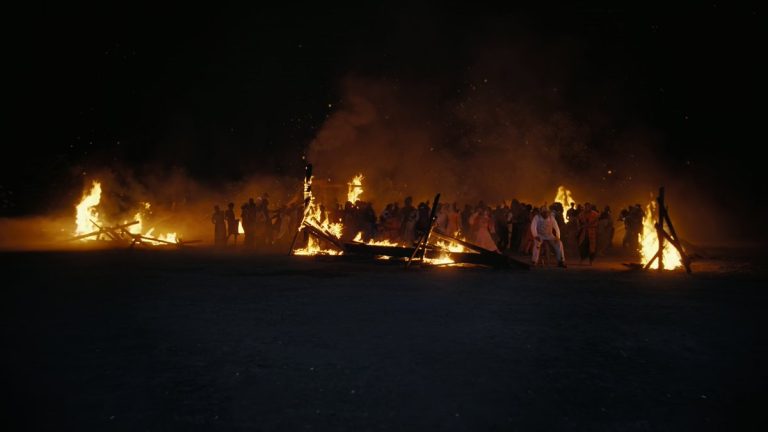

The 98th Oscars ceremony attributed the record-breaking 16 nominations and 4 Academy Award wins to Ryan Coogler’s Sinners. The movie was a hit during awards season, but also at the box office where it became the highest-grossing original film of the decade, surpassing 369 million dollars worldwide. What is more surprising is the fact that it is a horror and historical drama, which is usually a genre undervalued at the Oscars until very recently. The vampire movie did go beyond entertaining the public and fulfilling the expectations about what a horror movie is supposed to address and whom is it supposed to portray. This article aims to understand this point by addressing how the American Gothic genre allowed Ryan Coogler to go beyond the aesthetics of horror and offer a deeper exploration America’s anxieties about its past.
What is the Plot of Sinners?
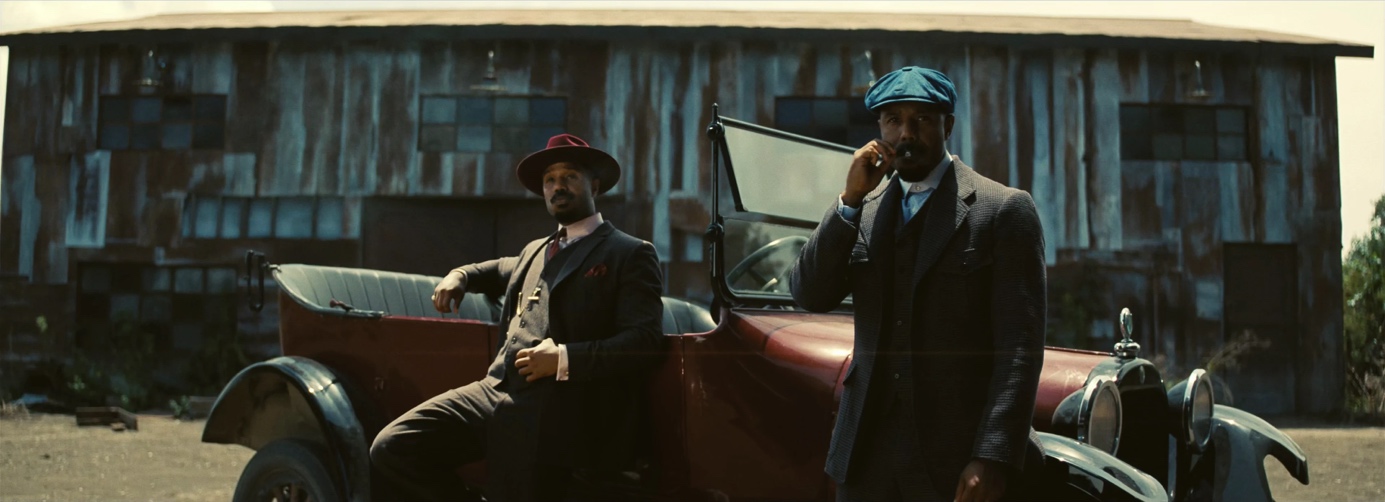
Set in 1930s Mississippi, Clarksdale, Sinners explores the Black experience in America during the segregationist Jim Crow laws. The story begins with Sammie (Miles Caton), a young man passionate about music and blues. His father is a preacher and condemns his musical activities, deeming them demonic. Still, after a week of cotton-picking, Sammie finds brief freedom playing guitar at a juke joint. The latter is opened by Sammie’s cousins, Smoke and Stack (both played by Michael B. Jordan). The twin brothers become the centre of the plot as they return to town after serving during WWI and working in Chicago for the mafia. They begin a journey in town to gather the community for their night opening as they reunite with their lovers: Smokes with his wife Annie (Wunmi Mosaku) and Stack with his former lover Mary (Hailee Steinfeld), a mixed-race woman passing as White and now married to a White man.
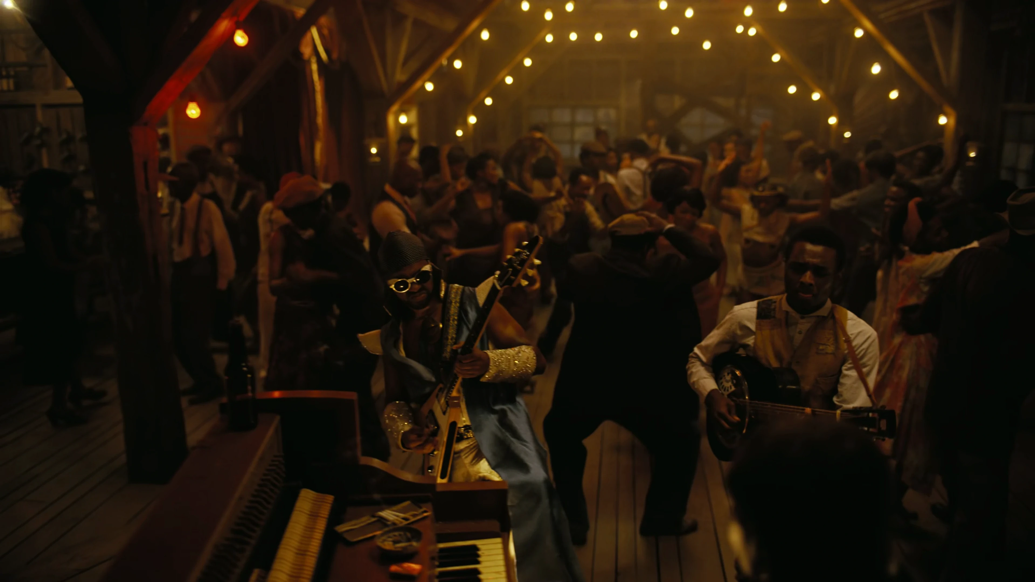
The night begins gathering many Black residents of Clarksdale through music and dancing at the new juke joint. The movie transmits the transcendent experience of blues that unifies the Black community throughout the ages. In an ecstatic scene, Sammie plays and sings a blues song that summons and unites Black musicians throughout history. A West African griot appears siding with a hip-hop DJ in a moment going beyond space and time.
Parallel to this scene, we encounter Remmick (Jack O’Connell), an Irish vampire that turns a White couple, former members of the Ku Klux Klan, into vampires. The trio tries to enter the juke joint but ultimately must be invited to cross the doorstep of the property. The vampires are quickly refused entry by the twins, Annie, and Mary, who are wary of their intentions. However, after noticing the financial state of the juke joint, Stake and Mary decide to give Remmick and the White couple a chance to spend their money with them. Mary looks for them in the evening and discusses with Remmick, who offers her real gold coins. She is finally bitten by Remmick and turned into a vampire. This event sets off a series of attacks and killings that turn most of the people in the juke joint into bloodthirsty yet strategic creatures.
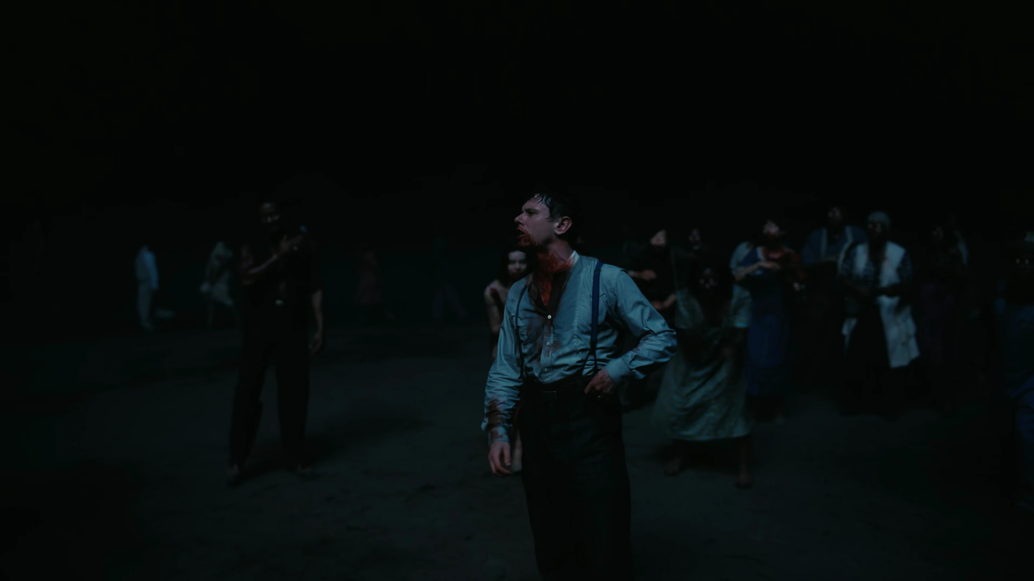
Remmick ends up explaining his intentions. He reveals being after Sammie for his gift with music, and that the Klan members were supposed to come in the morning to massacre the Black people inside the juke joint. Still, the few survivors inside the juke joint decide to fight the vampire horde and protect Sammie using Annie’s arcane knowledge. After a confrontation, the preacher’s son seems to be the sole survivor against the vampires. He hits Remmick with his silver guitar and pronounces a hopeless last prayer, but Smoke arrives and stabs Remmick in the heart with a wooden stake. The movie ends with all the other vampires burning in the sunlight and Sammie returning home to his father. After the events, his father requires him to give up on blues and embrace religion, but Sammie refuses. At the same time, Smoke is alone at the juke joint and kills all the members of the Ku Klux Klan that arrived as expected in the morning. He is ultimately shot and slowly dies, joining the spirit of Annie and his dead son in what seems to be the afterlife.
In a middle-credits scene, we learn that sixty years later, the older Sammie (Buddy Guy) kept playing music and is a successful musician. As he is closing his blues establishment, Stack and Mary appear. The two immortal vampires reveal that they survived the night of the tragic events after Smoke spared his twin’s life in exchange for Sammie’s protection. The characters reunite around Sammie’s music and share how the day of the tragic night, “before the sun went down, […] it was the best day of [their lives].”
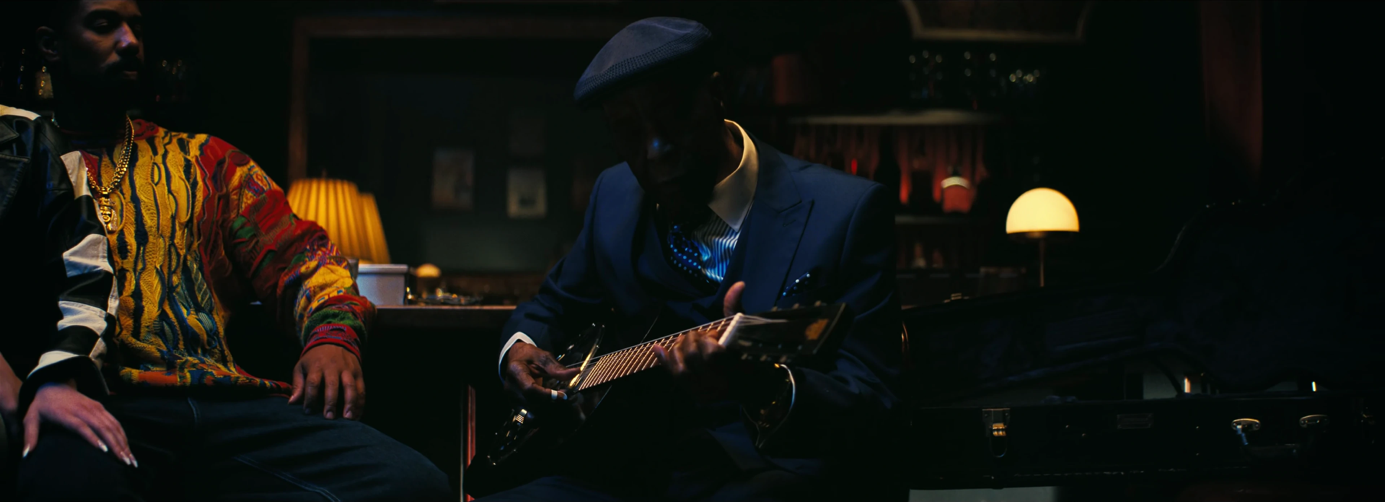
The movie is packed with action, but also with symbolism around horror through its violent scenes and eerie legends. More than just another movie about vampires, Sinners uses the Gothic beyond a simple aesthetic, and in order to understand the meaning of its story, it is important to define its approach.
What is the American Gothic?
As the author Donna Heiland explains, the Gothic is traditionally described in literature as a genre that aims to provoke fear both in the readers and in the characters it portrays. However, scholars like Agnieszka Soltysik Monnet, a professor at the University of Lausanne, challenge this view. In her book The Poetics and Politics of the American Gothic, Soltysik Monnet conceptualizes the genre as “a complex intellectual and ethical reading experience” that is “preoccupied as it is with ghosts, monsters, murders, and bizarre circumstances that raise troubling questions about cultural norms and complacencies.” The horror allows for a social critique as it intrinsically intertwined with the questioning of the “nation’s idealized myths” as Teresa Goddu quoted by Soltysik Monnet explains. The Gothic allows to parallel two spaces: the surface and beneath it, which ends up “provoking unease”, as the author Angela Carter quoted by Soltysik Monnet argues. The reader is slowly taken out of a sense of security and confronted with the omnipresent problems of America.
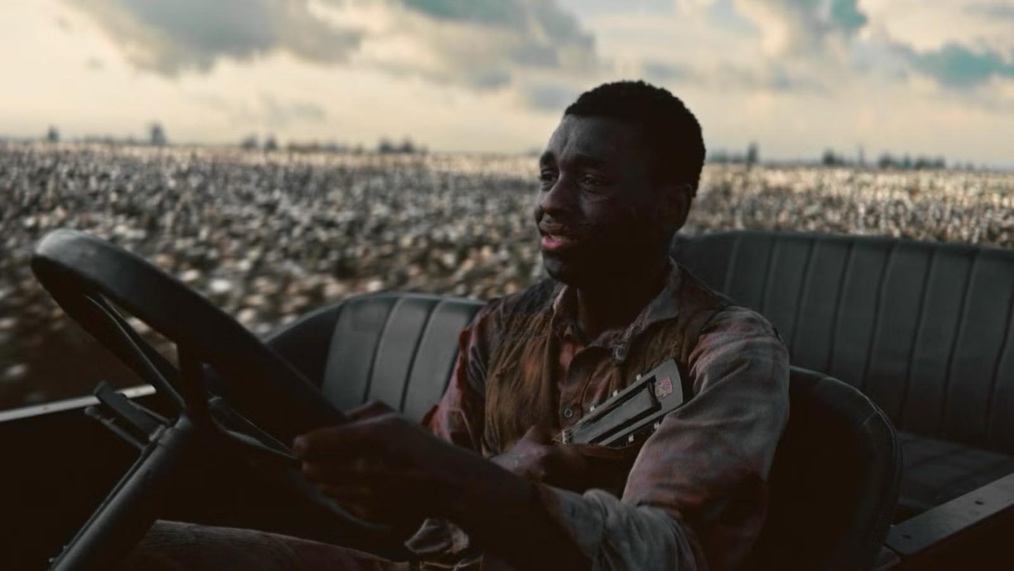
This latter pattern can be identified in Sinners, as the movie uses horror with the traditional vampire trope to elevate what would have been, without it, just another attack on the Black community in the racially divided American South. The genre subverts reality with its supernatural elements while still showcasing the realities of segregationist American history.
What Does the Gothic Expose in Sinners?
The historical setting of the movie provides the inevitable base for its events. Coogler then makes a supernatural parallel to address the conditions of the Black community during segregation laws. With the vampire figure being the centre of the plot, it further highlights the cruel inequalities of American society. It is thus important to address the different symbolic elements in Sinners established through the Gothic genre.
The Illusion of Freedom
The events of the movie happen 67 years after the abolition of slavery in the United States. Yet, in this southern town, most of its Black inhabitants are still reduced working in cotton plantations and have little time for entertainment. This encapsulates how the guarantee that the segregation system wanted Black and White people “separate, but equal” was illusory. The inequalities and violence towards Black people remained. The young Sammie himself is a victim of this system that keeps the former slaves and their descendants under the control of the plantation owners. The preacher’s son fantasizes about the northern towns, directly referencing the Great Migration that took place between 1910 and 1940 and that led 2 million people to leave the South with hopes of joining a non-segregated North.
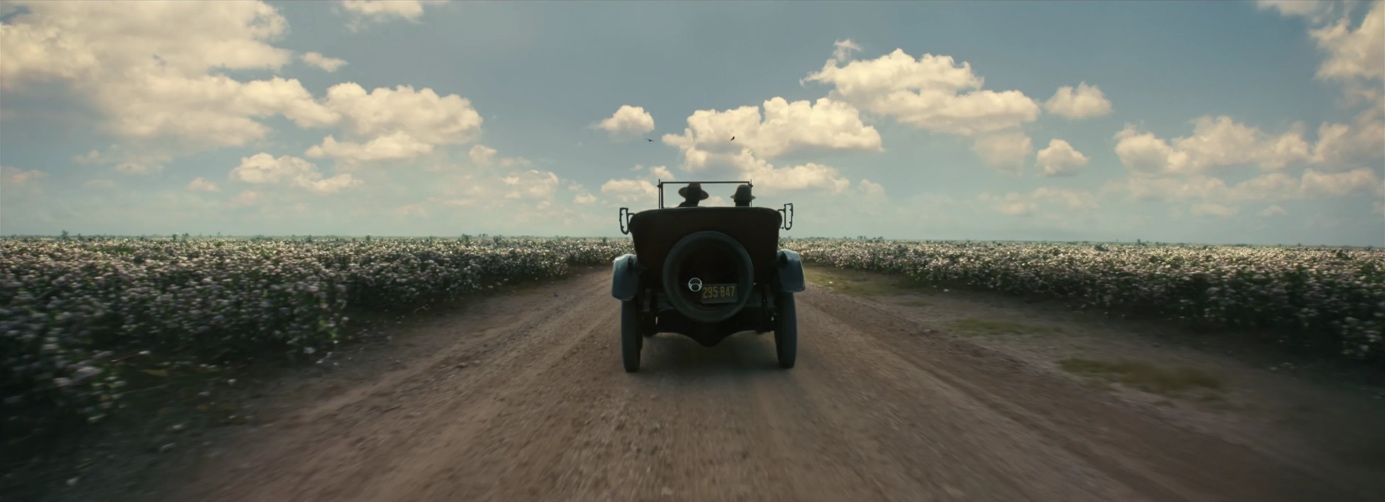
The movie erases this ideal as Smoke explains how “Chicago ain’t shit but Mississippi with tall buildings instead a plantation.” The twins’ background as mob members in Chicago also highlights how even money cannot give freedom to a Black person at the time. This point is established early on, creating a feeling of enclosure without possible escape for the Black community. It foreshadows how even without the vampires coming, the people at the juke joint would have been killed by the Ku Klux Klan members in the morning.
Even for Stack and Mary, who survive the night’s events as vampires, they still lose the freedom to live during the day and are devoid of the possibility of sharing a space within the Black community. They are stripped of their physicality and their ethnicity as Annie mentions: “The soul gets stuck in the body. Can’t rejoin the ancestors.” Even as vampires, Black people remain socially restricted, making the use of this supernatural element particularly relevant.
Religion and Salvation
The church is also often seen as an escape for the Black community, but, as Misty Avinger suggests in the article “The Price of Being Let In: Sinners and the Lie of Liberation,” the movie rejects this point by highlighting how even in the church, liberty is conditioned on submission to God as the only path to salvation. Sammie faces this problem in his final clash with his father. He refuses to renounce the music that his father views as demonic. Even after the events of the night, music remains a central point of cultural flourishing for the African American community.
Passing and Vampirism
Another element addressed in Sinners through the character of Mary is the fact that she is passing as a White woman in society. At the time of the story, if a person had “one drop of black blood” in her genealogy, she would be legally considered of Black ethnicity and subjected to segregationist laws. For mixed-raced persons, this meant that even if they looked completely white, as Mary does, they would still be regarded as Black. This point highlights the anxieties that may arise surrounding a system mainly based on appearances. The fact that Mary specifies how she “never wanted to be white” shows how mixed-race individuals could navigate the segregationist society as white, but still at the cost of their true ethnic background and community.
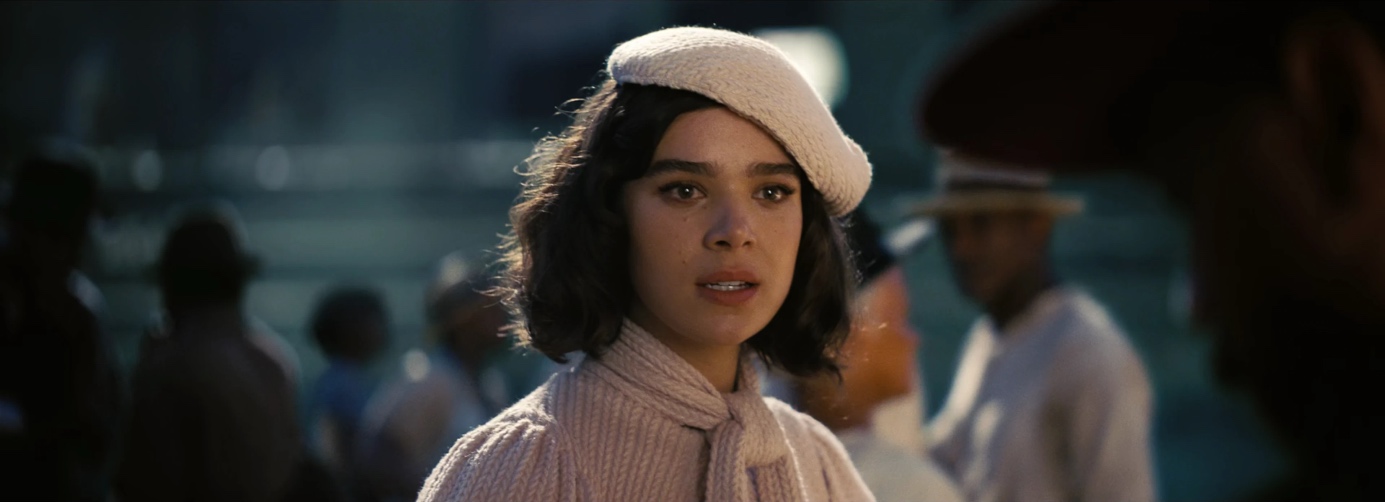
This point culminates in the relationship between Stack and Mary, who cannot be together because of how White she looked. As they become vampires, they outlive this law, which ultimately gives them the opportunity to be together in the eyes of society. Both vampirism and passing are paralleled as easier paths to black identity in a segregationist society, but both at the cost of ethnic loss as mentioned before.
Marginalized Knowledge
To fight the threat of vampires, Sinners highlights how certain sources of knowledge typically excluded from society are in fact very valuable. First, Native Americans appear in the movie as the first figures recognizing vampire danger. They warn the white couple about Remmick’s nature, but are dismissed, leading to the couple being bitten. The same happens with Annie, a female voice that is only considered when the danger is at the door. She is the first to acknowledge the supernatural nature of the danger, and her charm is what saves Smoke’s life. Yet even the members of her own community, like Stack and Cornbread, are skeptical about her reasoning, dismissing her as a “witch.” The two examples are testimonies of how non-white Christian knowledge was treated at the time, restricting further the marginalized groups. Sinners reverses this point with the use of supernatural violent tropes that can only be fought with marginalized knowledge.
The Oppressed becomes the Oppressor
As the Irish folk songs suggested, Remmick is in fact a quite old Irish vampire who lived during the colonization of Ireland by England during the Middle Ages. To some extent, this background parallels Black history in America. When Sammie says his final prayer in front of Remmick, the latter remarks that: “Long ago, the men who stole my fathers’ land forced these words upon us. I hated those men. But the words still brought me comfort.” This quote encapsulates how colonialism enforced Christianity on the Irish, just like the same religion was imposed on African Americans. As Remmick states, even if enforced, it is internalized and brings comfort, which furthers the point about religion as a restricted escape made previously.

Yet, even after enduring colonialism, the character still perpetuates the same ideology onto the Black community. Remmick’s main goal is to steal Sammie’s musical power, which also makes it stealing African American culture. His vampire figure encapsulates this point as he embodies the loss of his Irish ethnicity, he longs for community, and he sucks the culture out of others just like colonialism did to him.
The Blues
Music and its legends are the starting point of Sinners. Blues is at the centre of the story, as Remmick is attracted to the juke joint and Sammie because of the music’s power. Coogler plays with the folklore around music to gather the Black community in the movie, but also throughout the ages. Vampires act as an opposing force to this question. They represent immortality, but at the cost of the loss of the self, while music offers a legacy to African Americans without conditions and without evil.
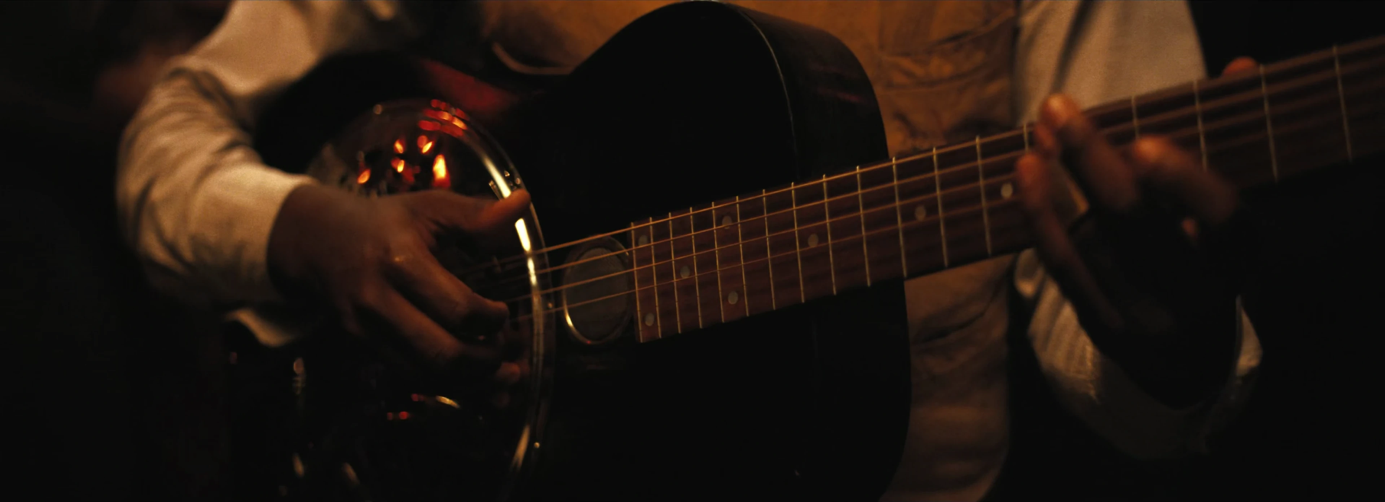
Music acts as a counterbalance to the Gothic horror of the Black experience in the 1930s, which highlights its power and efficacity even more. The movie suggests how there is an alternative to evil. Black culture and the blues are permanent throughout time, even during hardship and social injustice.
Conclusion
The Gothic in Sinners did indeed more than aesthetics and covering the myths: it encapsulated American anxieties and addressed the skeletons of the past. The use of vampirism allowed Coogler to encapsulate the Black experience and its impossibility to be fully free. The symbolism of the movie is crucial to the Black community of the time, and in a certain way, of the present. The immortal stories about vampires recall the ghosts of history that are very much alive.
Indeed, the quest for freedom and the centrality of art are issues that still resonate today. As Sinners cinematographer Autumn Durald Arkapaw remarked to the New York Times: “We don’t see movies made like this, by people that look like us, with this format (referring to the use of IMAX).” The cinematographer highlights how even today inequalities of opportunity are present among ethnic groups in America.
Yet, the success of the movie gives hope. Besides its 16 Oscar nominations and four wins, Sinners made history with Autumn Durald Arkapaw as the first woman of colour to win an Academy Award for cinematography. Ryan Coogler’s exclusive deal with Warner Bros. was also remarkable. It granted him a share of ticket sales, full editorial control, and all rights to the movie after 25 years. As Sammie did, Coogler put his art first as a gift for his community, which is still in an ongoing quest for freedom.
Carolina Silva Pereira
Images
https://www.imdb.com/fr/title/tt31193180/mediaindex/?ref_=mv?ref_=mv_sm (Cover page)
https://stillslab.com/gallery/sinners
Sources
- Soltysik Monnet, Agnieszka. The Poetics and Politics of the American Gothic: Gender and Slavery in Nineteenth-Century American Literature (1st ed.). Routledge, 2010.
- Sinners, Written by Ryan Coogler, Warner Bros., 2025.
- ‘Sinners’ and the Price of Artistic Freedom, The New York Times.
- ‘Sinners’, Coogler and Questions of Ownership, The Hollywood Reporter.
- Sinners is a horror film about the highs and lows of the Black experience, The Guardian.
- The Bittersweet Ending Of ‘Sinners,’ Explained, Forbes.
- The Price of Being Let In: Sinners and the Lie of Liberation, Bright Lights Film Journal.
- The ‘Sinners’ Cinematographer Says They ‘All Had a Lot on the Line’, The New York Times.
- The Symbolism in ‘Sinners’, The New York Times.
Similar articles:

A24 : Le Nouveau Visage du Cinéma Indépendant Américain

The economics of exploitation – Part I: the economic processes of slavery and colonialism
