

That’s a very strong opinion. However, the more I think about it, the more I am convinced.
I would like to warn you that you don’t have to be a technician to read this article. This subject can be seen from any point of view. So, to our readers, future political scientists, doctors, sociologists, lawyers, business manager, engineers, and more, let me tell you about one of the biggest pillar of our future society.
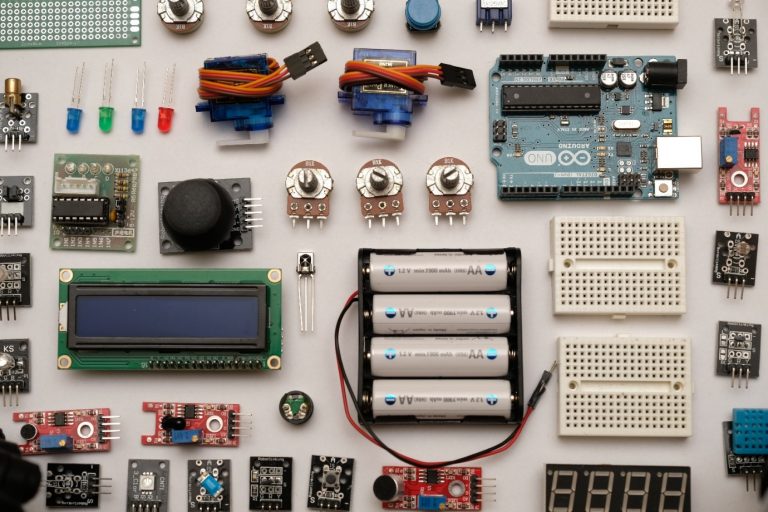
Sensors are the extension of the internet
California on October 29, 1969. The first internet link was established between the University of California and the Stanford Research Institute. That day, a revolution began. Today, our society is now more based on this technology than we can even think. Humans are now connected: they can spontaneously send and receive data from anyone. But where this data could be from?
What are sensors ?
The definition of sensor Wikipedia gives is:
A sensor is a device that produces an output signal for the purpose of sensing a physical phenomenon.
From a more conceptual point of view, sensor is what can transcribe a behaviour into data, it’s what capture information. Think about social media like Instagram or TikTok. They are the sensors of your tastes, sentiment and personality. The data created are very useful for these platforms to redirect you to specific ads.
Information is the key
Every problem is an optimization problem: finding what gives the best results. There are today incredible technologies for optimization, some of them are even scary effective, particularly machine learning. At first glance, we can think machine learning as a 21th century discovery. Surprisingly, the math behind exists since the 19th century. If this technology has emerged quite recently, there must be something behind. Which is the generalized data collection, which brings us to sensors. The more you feed, the better are the results. The potential of this technology is vast and diverse.
Sensors in natural resources exploitation
Capturing chemical composition
In the heart of the primary sector, sensors are revolutionizing the way we understand and manage chemical compositions. These unassuming devices, often buried in soil, deep within mines, or beneath the waves, are transforming agriculture, mining, and fishing.
In agriculture, sensors analyze soil, measuring pH levels, nutrient content, and contaminants. They help farmers optimize crop yield, reduce chemical inputs, and protect the environment. In mining, sensors detect the concentration of valuable minerals, guiding extraction and waste reduction.
Sensors open a window to precision agriculture, sustainable practices, and environmental challenges. They reveal the impact of government regulations and debates within these industries.
Sensors and weather
In the realm of the primary sector, sensors are the unsung heroes capturing the weather’s intricate dance. From fields to fisheries, these devices provide real-time meteorological data, empowering farmers and other industry stakeholders to make informed decisions. Sensors offer a window into the impact of weather on agriculture, fishing, and resource management, revealing how modern technology enhances traditional practices.
Mapping the environment
In the ever-evolving environment, sensors have emerged as indispensable cartographers, mapping the earth. These devices, whether airborne or embedded in soil, unlock geospatial data crucial for agriculture, mining, and more. Sensors illuminate how precision mapping guides land use, resource management, and environmental stewardship.
But behind the data and algorithms, there’s a human story—the farmers, miners, and fishermen. Sensors enhance their expertise, making their work more efficient and environmentally friendly.
Sensors in production
In the secondary sector, sensors control production speed. These technologies often embedded in machinery, optimize efficiency, reduces waste, and responds to market demands. There are also very useful for checking hygiene and production norms. This allows production defects to be systematically and instantly located. Control is more rigorous and waste avoided. These infrastructures constitute what is commonly called industry 4.0. Many companies are investing today to integrate these technologies into their business.
About now and the future
There is however an infrastructure to build, and several questions to discuss. Indeed, this technology needs to be supported by an ethical, legal and political structure. For any domain, sensors are a subject.
Sources :
https://en.wikipedia.org/wiki/Sensor
https://en.wikipedia.org/wiki/Fourth_Industrial_Revolution
Dans la même thématique, la rédaction vous propose les articles suivants :

– ISMIRA MAHMUTOVIC –

– MANOEL PIDOUX –

– MATTHIEU SEPPEY –