

Sport is about overcoming hurdles. Whether they are the limits of the human body, extreme conditions, or opposing teams, it’s what we enjoy most about it. Women’s sports are no different, except for one big additional roadblock: systemic hurdles such as lack of research, funding, visibility, etc. With the rise of TV, the internet and streaming, potential audiences are so large that the field has been professionalized. Yet the broad professionalization of women’s sports is a decidedly recent phenomenon.
Small Beginnings
We’re skipping the old hockey history and skipping to when Canadians reshaped the sport of hockey at the end of the 19th century. The game was far from being what we know today, considering cornerstones of hockey such as the forward pass hadn’t been invented yet.
Around the time of the First World War, two women’s hockey scenes emerged. One centred around Seattle and Vancouver, the other around New York. Seattle Vamps vs. Vancouver Amazon games were some of the first true competitive women’s sports events, rather than mere Sunday leisure activities. They still faced society’s expectations about women and women in sports, forcing them to wear skirts during play. These developments coincided with broader suffragette movements, which allowed women to begin bending the gender roles imposed upon them, considering that women were taking over men’s work as part of the war effort.
Fast forward, Canada becomes an independent dominion, another world war happens, women get to play in slightly shorter skirts that could even be pants. But for every step forward, there is a step backward and a whole bunch of nothing in between, as another obstacle to a competitive women’s hockey scene emerges: money, or rather the assumption of rink and stadium owners that the women’s game will never be profitable, stifling the competitive games and growth for decades.
Interestingly, it was because of its status of being a “leisure activity” that allowed its continued existence. At a time where some considered access to higher education for women to be devastating for society, as its challenges would draw away nutrients and energy from their most valuable asset – their wombs. As a means of prevention against weakened children, advocates of higher education for women and colleges provided a vast array of college sports to strengthen the bodies of young men and women.
At the time, men’s college sports were a violent and brutish affair, wholly unbecoming of women. On the American side, the NAAFs (National Amateur Athletic Federation) consequently elected to replace women’s sports competitions with “play-days”. Women’s sports should not serve the spectators enjoyment or any commercial advantage. Intercollegial competitions were gone and girl rules put in place to distance the women’s from the men’s game. Men’s hockey’s violent nature already making it an unbecoming sport for women, the financial burden of the game put the final nail in its coffin.
Resurgence
It was only in the late 60s and early 70s, that women’s hockey reemerged from its relegation to a recreational pastime. Nancy Schiefferlein, after having been seen playing on a rink at Pembrooke College in 1964 got an invite to play for a men’s hockey team that was desperate for any spark to get them going. When she first suited up for the team, only three others on the ice knew she was a woman. Afterwards, she was allowed to found the first US women’s university hockey varsity team, the Pembrook Pandas. The team would play a variety of opponents and ultimately head to Canada on charter buses to play against the emerging Canadian women’s college hockey teams.
During the renaissance of women’s hockey, on the other side of the 49th parallel, Angela James, the daughter of a Black American fleeing segregation and a white Canadian woman, got kicked out of a boy’s hockey team at eight years old for dominating the league. The boys she was competing against were twelve.
She persevered and would have a fantastic career. She won multiple MVP awards and titles in the Ontario College Athletic Association Women’s Hockey League during the 80s. Despite her success, her life was everything but easy. She experienced racial abuse, struggled academically to the point of almost being expelled from college, had alcohol issues and got into fights. Still, she played in the instable, ever shifting and crumbling world of competitive women’s hockey for years.
The 90s brought two rare but influential constants to the world of women’s hockey: the first official IIHF women’s world championships in Ottawa (where James scored the first goal of the tournament, leading Canada to gold) and the introduction of women’s hockey to the Olympic Games at the 1998 Nagano Olympics. Amidst a feud with Canada’s coach, James would be left off the team. The US would win both matches against Canada in the tournament, ultimately taking home gold. The “What If? » of James’ participation still overshadows the tournament.
Her swansong took place during the 3 nations cup in 1999, where she would score the only shootout goal that would ultimately hand Canada the victory. She retired in 2000 with (on average) over a point per game in 50 appearances for the national team. By all accounts she was the first modern women’s hockey superstar.
High Hopes
The formation of both collegiate and amateur / semi-professional leagues continued into the 2000s but real professional opportunities remained notably absent. Multiple leagues were established, only to fold soon thereafter. The Canadian Womens Hockey League (CWHL), despite its amateur status, represented the highest level of play in women’s hockey during the 2010s in North America, together with its rival league the National Women Hockey League (NWHL) south of the border. Players’ salaries in these leagues ranged from around 2000$ to 10’000$.
There were Chinese teams to play in the CWHL (yes, really) that paid their players around 100’000$ which was an incredible step up. The money was hard earned, as they had to move to China, taking on not only playing but also coaching duties for Chinese players and prospects.
Others took a completely different path: Women playing in men’s hockey was a relatively common occurrence with Manon Rheaume, a Canadian goaltender and 1998 Olympic silver medallist going as far as playing an exhibition game for the NHL’s Tampa Bay Lightning.
Hayley Wickenheiser became the next great Canadian superstar, winning four gold and one silver medal in 5 Olympic appearances. She played in the men’s Finnish third division for two full years starting in 2003. This arrangement was a good fit for her as the European leagues are less physical and hitting was still forbidden in the women’s game at that point.
Into the Wilderness
Financial instability and general dissatisfaction came to a boiling point in 2019, when the CWHL ceased operations. After a possible merger failed, the NWHL tried to establish franchises in the markets vacated by the CWHL. However general dissatisfaction with the handling of women’s hockey coupled with the low salaries led to a joint statement and a general boycott of women’s hockey by many players led to the formation of the Professional Women’s Hockey Players Association (PWHPA). For the next years, they’d play exhibition matches as part of the Dream Gap tour around North America, fighting for better conditions in their sport.
The NWHL restructured, rebranded as the Premier Hockey Federation and relaunched in 2021. It saw increased salary caps at 300’000$ in its first season, which would rise to 1.5$ million in the 23/24 season. Before that season got underway, the League was bought out by Mark Walter and Billie Jean King, who in cooperation with the PWHPA players that had remained on strike formed the PWHL a unified women’s hockey league. The PWHPA turned into the PWHLPA (PWHL Players Association) and negotiated a collective bargaining agreement with the PWHL, allowing for their return to the league. At its conclusion it contained benefits such as minimum salaries at 35’000$, relocation, maternal and health benefits that the PWHPA fought for.
That is not to say that everything was well. The inaugural group of teams consisted of 6 teams in Toronto, Montreal, Ottawa, Minnesota, New York and Boston, meaning that between Dream Gap Tour and PHF, at least 100 players went without a spot. After everything, one organisation had finally unified women’s hockey in North America.
Morning Comes
The initial impression one might have gotten of the PWHL was that it was unfinished. The season started in early January, with teams wearing distinct colours but bearing no team names other than their location. Their jerseys looked the same with only colours and the city name on a diagonal font serving as a distinction. For what it’s worth, they nailed the colour schemes.
The reasoning behind it was simple. The league was essentially built up in 6 months, not enough time for the usual 18–24-month cycle needed to create and produce new jerseys. Training facilities, arenas and not having to delay the start of the season to the Fall of 2024 were more important than branding, especially since they had to get it right the first time. Women’s sports merchandising is a market worth an estimated four billion dollars after all. In January 2024 the first game got underway, where the PWHL would have convince its fans based on their output on the ice.
The venues for the first season were professional, although only the Minnesota team played in an NHL stadium, the Xcel Centre with a capacity of 18’064. The Toronto stadium was the smallest with 3’800 with most other hovering around 5’000. Fortunately, all teams could also play games in the stadiums of their respective city’s NHL franchise. Furthermore, they played games in neutral site stadiums. Both would be used to gauge interest, both for an increased stadium for existing teams and for possible expansion locations.
But first the teams needed to get players. Each team could first sign three players, followed by an inaugural draft. Most teams primarily selected players from their country, while all 3 Minnesota signings had direct roots in the state.
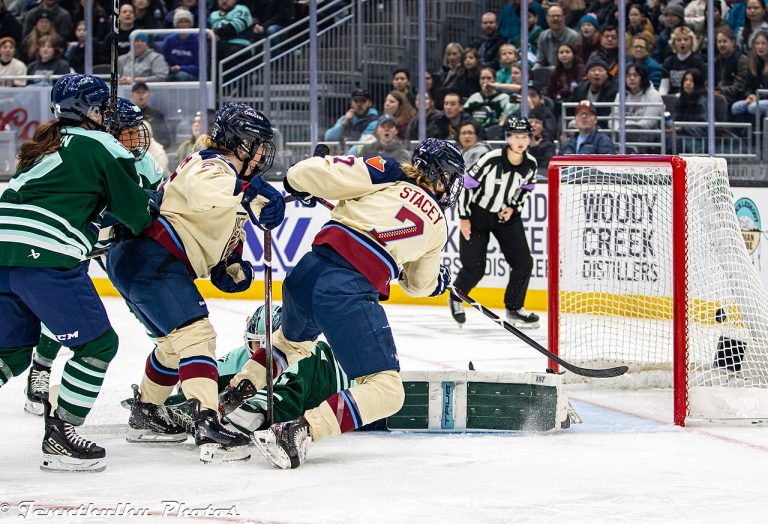
All eyes were on the best player in the game: Marie Philip-Poulin. Unsurprisingly, the French-Canadien and her wife, the Two-Way Power forward Laura Stacy, both signed with Montreal, as well as one of the best goaltenders in the world, Ann-Renée Desbiens.
Boston signed two cornerstones of American Hockey with Hilary Knight and Megan Keller and young goaltender Aerin Frankel (remember her name). Ottawa was the third team to scoop up a goaltender with Emerance Maschmeyer and Toronto’s biggest signing was hockey superstar Sarah Nurse.
The inaugural draft on September 18th 2023, consisted of 15 rounds and contained both rookies and seasoned players from previous leagues. Taylor Heise from the University of Minnesota went first overall to Minnesota. At number 3 came a familiar face: Wunderkind Alina Müller would join Boston as the league’s first Swiss Player. At the conclusion of the draft, every team had 18 players on their rosters, which they then free completed with freely signable players.
On January 1st, 2024, the inaugural game got underway in Toronto. Ella Shelton from the visiting New York Team would become the trivia answer for the first goal scored in the league. Alex Carpenter, Jill Saulnier and Kayla Vespa would add another 3 for New York, and New York goaltender Corinne Schroeder had the honour of recording the first shutout in PWHL history.
Fresh Winds
The league is made all the more intriguing because it dares experimenting with the rules of the game. One such change is the jailbreak-rule, allowing a team serving a minor penalty to end the penalty early by scoring a short-handed goal. Another is the no-escape-rule introduced in their sophomore season, disallowing the penalized team from changing players on the ice on the break following the penalty.
Limited bodychecking is allowed, making the game more physical. Its inclusion came at the request of the players and dangerous hits remain heavily penalized.
In a considerate improvement from the men’s game, the PWHL introduced an anti-tanking rule: The draft order of non-playoff teams is determined by the amount of points they collect after being mathematically eliminated from play-off contention. A bad team has the longest time to accumulate points for the number one overall draft pick, but if they are too bad, another team might win enough games after elimination to snatch it away.
They adopted the 3-2-1-0-point system (Win – Overtime Win – Overtime Loss – Regulation loss) commonly used in Europe instead of the NHL’s 2-2-1-0 system. The 4 best teams would face off in the playoffs, decided as best of 5 series. The regular season winner would be able to choose if they wanted to play the third or fourth placed team.
Playoffs
The first playoffs were spectacular. Regular season winner Toronto would be reverse swept by Minnesota after going up 2-0 in the series, while Boston would sweep Montreal outright, in a series that was incredibly close (all three games went to overtime), delivering on what has been an all-time, century old hockey rivalry. Boston’s Aerin Frankel broke the save record in a PWHL game twice that series.
The final would be between Boston and Minnesota, and not to disappoint it went to 5. With Minnesota up 2-1, game 4 went to double overtime. Alina Müller scored the only goal of the game sending it back to Boston for game 5. Minnesota’s Goaltender Nicole Hensley won it for Minnesota in Game 5, making the State of Hockey the inaugural winners of the Walter Cup.
The first season was everything they could have hoped for: High attendance showed real momentum for the sport, while the product on the ice was true best-on-best hockey, as exemplified by the goaltenders. In the Toronto – Minnesota series, 4 out of 5 games featured a shutout. Toronto’s Cristen Campbell had a 0.93 goals against average. Every game in the Montreal – Boston went to overtime and ended in football scores, 2-1, 2-1, 3-2. In the final, 3 out of 5 games would feature a shutout as well. While there weren’t a lot of goals, there were a lot of spectacular saves.
New Kits New Season
The second season finally featured branding. The teams north of the border featured the Ottawa Charge, the Toronto Sceptres and the Montreal Victoire; south of the border the New York Sirens, the Boston Fleet and the Minnesota Frost embraced their new jerseys.
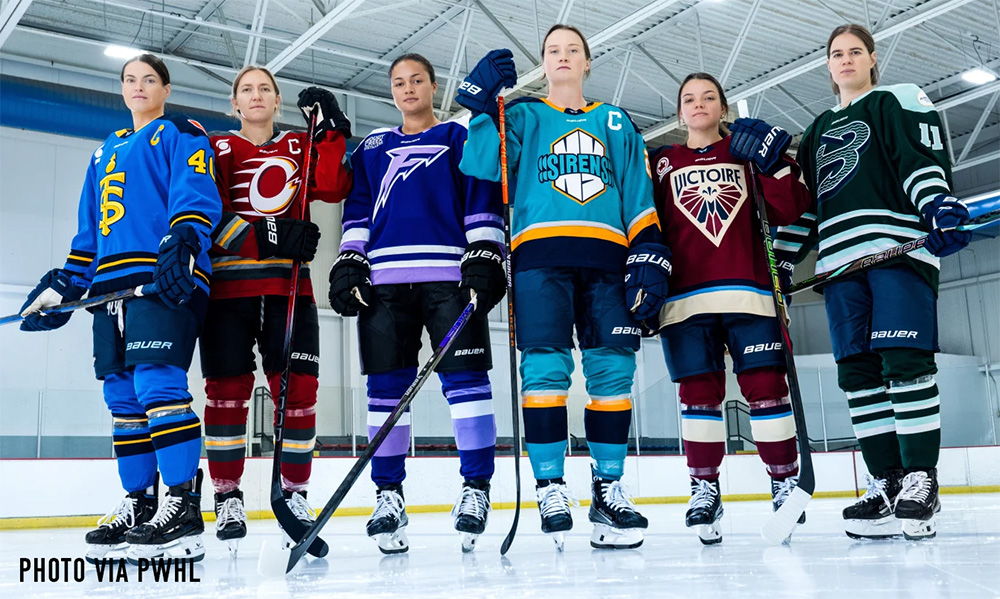
Some teams also got an arena upgrade to accommodate high ticket demand. The New York Sirens would be the second team to play in an NHL arena, sharing the Prudential Center with the New Jersey Devils.
The Montreal Victoire would finish the regular season in first place, with Toronto in second. Third, fourth and fifth place, all had 44 points. The tie-breaker breaker being regulation wins meant Ottawa and Minnesota were in, Boston was out. Montreal would choose to play third placed Ottawa, winning only one game, in quadruple overtime. In every other game, Ottawa goaltender Gwyneth Philips allowed only one goal per game, sending the Ottawa Charge to the finals.
The goaltenders in the Minnesota – Toronto series were having a bit of a slump, with Minnesota taking a 2-1 series lead in a 13-goal barn burner. Taylor Heise crushed Toronto’s hopes in overtime during the next game, giving Minnesota a chance to defend their title.
The final was something special. Every game ended in a 2-1 score. Every game went to overtime. Minnesota would take it in 4, becoming back-to-back champions. Gwyneth Philips was awarded the rare honour of winning “Playoff MVP” as a player on the loosing team. Her playoff stat line was ridiculous: a 0.919 save percentage and 2.11 goals against average with two shutouts. With her in the net, Ottawa didn’t lose a single regulation-game all playoffs.
Growing the Game
Before the beginning of the third season, the league expanded westward, adding the Vancouver Goldeneyes and the Seattle Torrent. An expansion draft was held to fill these teams with players. Each team could protect a couple of players to keep their starters, but they all lost some pretty good players.
The New York Sirens would pick Kristýna Kaltounková from the Czech Republic first overall in the draft after already picking Sarah Filler first overall the year prior. Nicole Vallario from Switzerland, an undrafted rookie, also made the opening day roster with the Sirens after an impressive training camp.
The Olympic break would provide some more hype for the league: During the tournament, the PWHL’s players would be front and centre for their respective countries. Resident Caesar salad enthusiast, Aerin Frankel and Team USA would once again eat the Canadians for lunch, comfortably winning gold. But there were many others such as Alina Müller, who scored the bronze winning goal for Switzerland for the second time in her life. It’s a shame that such a successful tournament was subsequently overshadowed by a President that can’t help himself but make jokes at their expense. But all of this had to be put to the side as the last stretch of games began.
At the time of writing this article, the playoffs have started. The winner of the regular season, the Montreal Victoire, selected to play against the third placed Minnesota Frost, while second placed Boston is playing against Ottawa.
Watch for Free
Watching the PWHL is free for Swiss residents. All games are available live on YouTube, with links provided below. Will Marie Philip-Poulin finally win the only trophy missing in her collection after an injury riddled year, or will the Frost establish a dynasty? And who will win the Battle of the Brick Walls? Aerin Frankel with Boston or last year’s playoff MVP Gwyneth Philips with Ottawa?
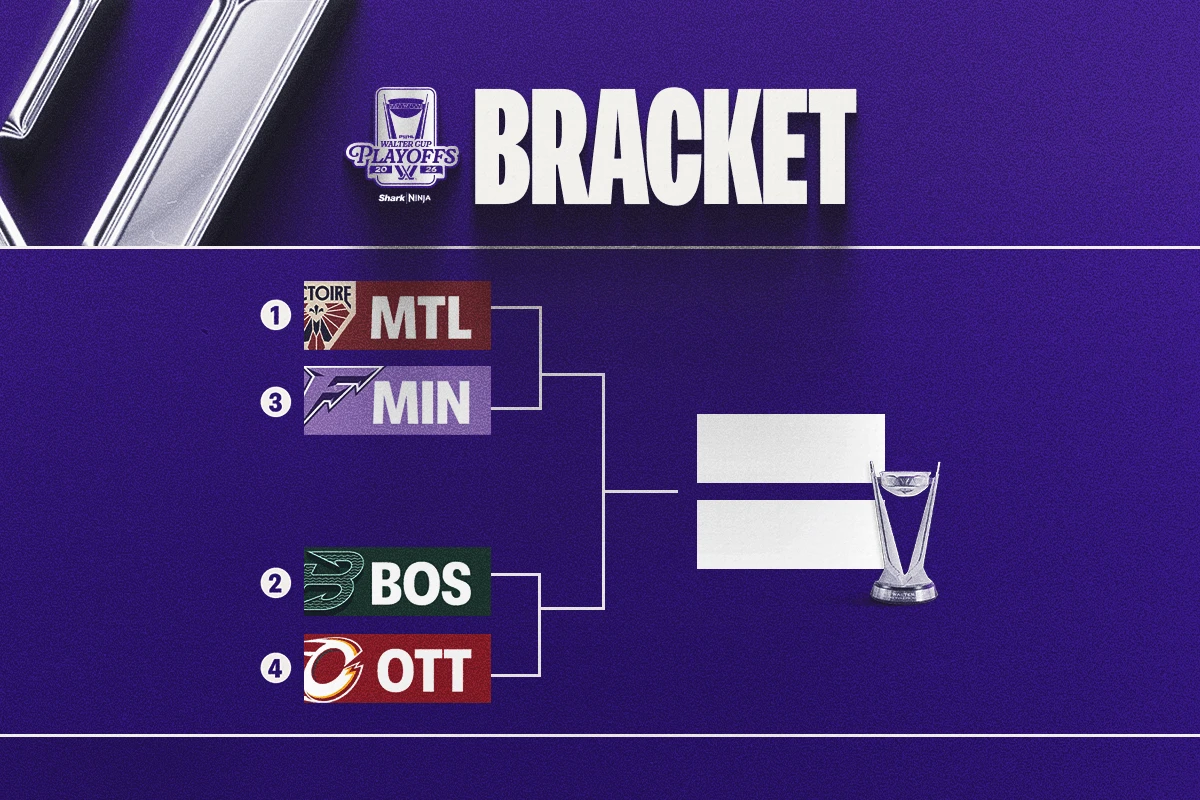
As of writing this article, Botson – Ottawa stands at 1-1 with Both Philips and Frankel playing as good as everyone expected. The first playoff hattrick in the PWHL’s History scored by Laura Sacey went unrewarded, as Montreal lost 4:5 in overtime, handing Minnesota a 1-0 series lead.
If this growth continues, a provider in Europe will soon enough pick up the rights to the PWHL, so enjoy the free access as long as you can, especially as a cash strapped student. But the inevitable loss of free access will also mean that the league has continued to grow, and that finally, the players will be able to “only” be professional athletes. With how successful the league has been in its first 3 years, that may be very soon.
Jonas Bruno
Links and sources:
.jpg)
Similar articles:
Quand la glace cesse d’être un reflet

The Sports Gambling Epidemic
