
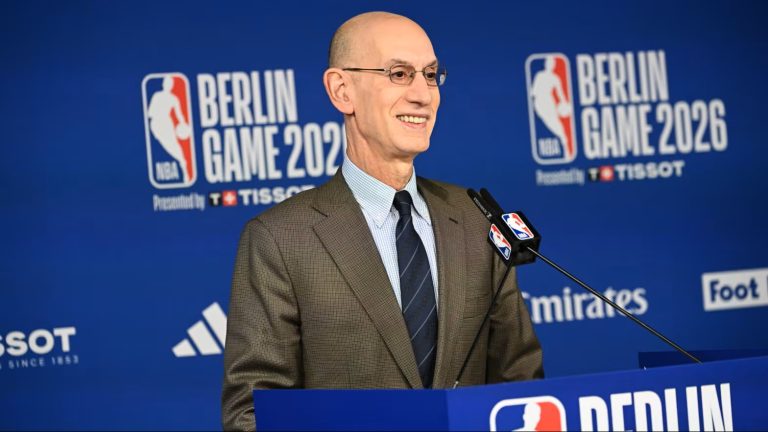

Basketball has never been more European. This season, 71 players born on the “Old Continent” are playing in the NBA, the American professional league widely considered the best in the world, and several rank among the planet’s biggest stars: France’s Victor Wembanyama, Slovenia’s Luka Dončić, Greece’s Giannis Antetokounmpo and Serbia’s Nikola Jokić. Yet, despite this flood of European talent, the NBA had always refused to set up shop in Europe.
That is about to change. In October 2025, Mark Tatum, one of the league’s senior executives, publicly announced the ambition to launch an NBA league in Europe by 2027. Sixteen teams spread across the continent’s largest cities (London, Paris, Madrid, Berlin, Milan, Rome), with real franchises, real arenas, real games. A colossal project, backed by investors as unexpected as PSG, Liverpool FC and Gulf sovereign wealth funds.
Beneath the enthusiasm lies an economic question that the official narrative leaves in the shadows: who really stands to benefit from this expansion? To answer it, the project must be broken down along three dimensions: who pays to get in, who controls the rules, and who captures the generated revenue.
Who pays? Franchise fees and investors
An entry ticket between $500 million and $1 billion
Before analysing who decides and who wins, one must first understand what a “franchise is”, a concept so central to American sport yet so often misunderstood in Europe. Buying a franchise is not the same as buying a club in the European sense of the word. It is not becoming the owner of Real Madrid or OM, with their history, their stadium, their academy. Instead, it means buying the right to operate under a brand according to rules entirely defined by the central league.
The analogy with a fast-food franchise is illuminating: a McDonald’s franchisee owns their restaurant, but has no say over the menu, the prices, or the brand’s overall strategy. They pay to use the brand, and the brand sets the rules. The concept also draws its meaning from the reality of so-called « closed » sports leagues, which are the dominant model in the United States. These leagues are not open systems with promotion from lower divisions: every year, the same teams compete, and there is no way to enter the competition unless you are already one of the member teams. Buying a franchise therefore also means buying the right to play in a closed league.
The entry price for European teams wishing to join this new NBA Europe is estimated at between $500 million and $1 billion per team. But that figure represents only the right to enter the league: it does not include the cost of building the structure itself. Constructing or renovating an arena to NBA standards, recruiting sporting and administrative staff, and financing the early loss-making seasons needed to build a local fanbase. The real investment for a European owner could easily exceed $1.5 billion, possibly reaching $2 billion per franchise.
Why not simply add European teams to the existing NBA?
At this point, a legitimate question arises: if the NBA wants to establish itself in Europe, why not simply create new franchises in Paris, London or Madrid and integrate them directly into the American league, as it did in the past when adding teams in Memphis, Charlotte or Toronto? This option, seemingly simpler, is economically blocked by the very structure of the NBA.
The American league is governed by a decision-making board made up of the thirty current franchise owners. They are the ones who collectively vote on the major strategic, economic and regulatory orientations: new TV rights deals, salary cap modifications, league expansion. These same owners share the NBA’s collective media revenues, starting with the $76 billion deal signed over 11 years with ESPN/ABC, NBC and Amazon for game broadcasting. More franchises would mechanically mean less revenue per franchise.
In concrete terms, if the NBA added four new European teams to its main league, the TV rights pie would be redivided into 34 shares instead of 30. Each current owner would see their annual share drop by tens of millions of dollars, with no direct compensating benefit. Since these are precisely the owners who must vote on expansion by qualified majority, no direct integration can therefore emerge: they have no rational interest in accepting a dilution of their own rent.
NBA Europe brilliantly sidesteps this problem by creating a legally separate league. The entry fees paid by the new European owners, totalling roughly $9 billion, flow directly back to the thirty American shareholders as licensing fees on the NBA brand, without any of them giving up the slightest share of their decision-making power over the parent league. It is, in net terms, a transfer of wealth from European investors to owners across the Atlantic, made possible by a piece of legal engineering that separates the brand (centralised) from sporting ownership (local).
Who decides? The asymmetric governance of NBA Europe
Owner of a team, tenant of a league
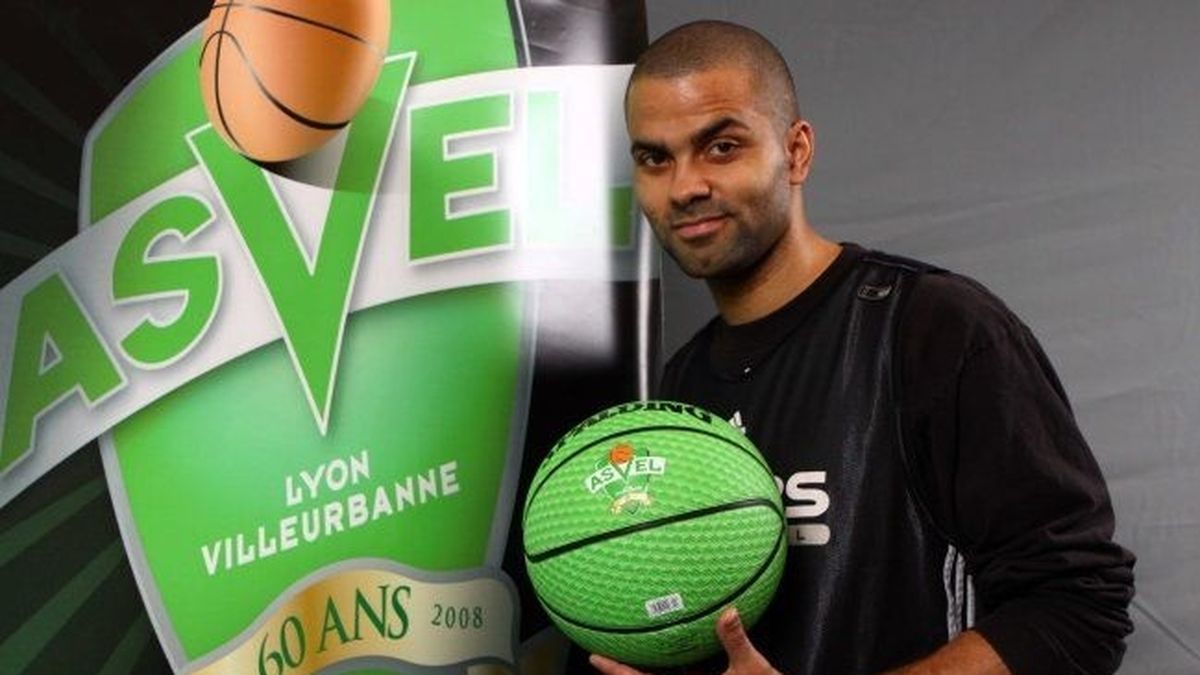
Before turning to the investors, one must understand the fundamental difference between NBA Europe and the existing European basketball league, the EuroLeague. The latter is a company owned by its member clubs: they vote on the rules, negotiate TV rights collectively and share governance. Clubs such as Real Madrid, Barcelona or Tony Parker’s ASVEL are both members and co-owners, giving them a voice in the league’s major decisions.
NBA Europe will operate on a radically different logic. It will be a league managed by the NBA, in which local owners will be operators rather than co-decision-makers. The salary cap, the competition format, the transfer rules, and above all the global media rights will be defined in New York. European owners will decide on their coaches, their local communications and their ticketing. They will have no say over the central economics of the league.
Who are the investors ? The irruption of football clubs
The distinctive feature of the project lies in the nature of the investors being targeted. The NBA is not approaching European basketball clubs first: it is approaching the sporting and financial conglomerates capable of putting up the required entry tickets. Players who happen to be, in Europe, mostly drawn from the world of football.
Qatar Sports Investments, owner of PSG, was presented with two distinct proposals: the acquisition of an existing Parisian club, Paris Basketball, currently in the EuroLeague, or the creation of an entirely new franchise integrating other investors. Fenway Sports Group, owner of Liverpool FC, has also been approached. The group, which owns the Boston Red Sox and the Pittsburgh Penguins among others, sees in NBA Europe a diversification consistent with its multi-sport strategy. RedBird Capital Partners, an investor in Liverpool FC and owner of AC Milan, is among the other expected candidates. The Saudi sovereign wealth fund, PIF, has also been mentioned. Luka Dončić, for his part, is a member of an investor group seeking to establish a franchise in Rome.
Beyond the names, the underlying logic is shared: these investors are not looking for a short-term return on investment. They are buying an asset of global legitimacy, with the NBA as a label of institutional quality. This investor profile is a windfall for the NBA, securing entry fees without pressure on immediate profitability. But the situation raises a question for the European ecosystem: does a franchise owned by a sovereign wealth fund or a football conglomerate have the same interests as a club rooted in its local territory?
The EuroLeague rift: a war of economic sovereignty
Beyond regulatory questions, the NBA Europe project runs into a major institutional obstacle: resistance from the existing European league. The EuroLeague’s reaction says everything about the real stakes of the project. It is not a sporting conflict; it is a conflict of economic sovereignty over European basketball.
To understand why some clubs are tempted to leave the EuroLeague, one must first look at its financial reality. Most of its clubs are structurally loss-making: costs (salaries, travel, infrastructure) far exceed the revenues generated by TV rights that remain modest on a European scale. The model holds together thanks to subsidies from wealthy owners or the budgets of clubs attached to large multi-sport institutions, such as Real Madrid or FC Barcelona. NBA Europe, drawing on its global brand power and its ability to negotiate media rights at an entirely different scale, represents for these clubs the promise of a finally profitable model.
It is this promise that explains the diverging trajectories of the major clubs. Real Madrid is leaning towards leaving the EuroLeague to join NBA Europe as early as 2027-28. Barcelona, by contrast, has chosen to sign the new ten-year licence agreement with the EuroLeague. ASVEL, the French club owned by Tony Parker, is for its part already nearly out. The EuroLeague has officially notified the NBA of possible legal action, the first signal of an institutional confrontation that could force the NBA to renegotiate the entry conditions for historic clubs.
But the project raises another, less visible tension: the cities chosen by the NBA do not necessarily correspond to the historic strongholds of European basketball. The Balkans (Belgrade, Athens, Ljubljana) have produced a considerable share of the world’s best players and host some of the continent’s most decorated clubs. Lithuania, with Kaunas and Žalgiris, is as much a basketball nation as a football one. These territories sit culturally at the heart of the European game, but they do not offer the consumer pools, the modern arenas, and the advertising market the NBA is looking for. The NBA Europe project is conceived from a revenue logic, not a sporting one, and that mismatch could weaken its cultural anchoring over the long term.
The salary cap: a regulatory Pandora’s box
Finally, several challenges revolve around the idea of the salary cap, the central mechanism of the NBA’s economic model. The salary cap sets the total amount of salaries a franchise is allowed to pay its players. For the 2025-26 season, it is set at $154.6 million per team in the NBA. NBA Europe will have its own cap, necessarily lower, but at what level? If the European cap is too low, NBA Europe will not be able to retain the best players against EuroLeague clubs capable of offering competitive salaries: Nikola Mirotic, for instance, was earning around $5.4 million at Barcelona. But if it is too high, European training clubs (Real Madrid, ASVEL, ALBA Berlin) will lose their economic model.
On top of this comes an unprecedented regulatory complexity: France taxes differently from Spain, which taxes differently from Germany. An American-style salary cap applied across multiple European tax jurisdictions could create substantial distortions between franchises in the same league.
Who wins? The distribution of revenues in NBA Europe
Financial flows favourable to the parent league
An NBA Europe franchise will generate several types of revenue. Ticketing and arena revenues will be entirely local, and entirely the responsibility of the owners. Local media rights, such as Canal+ in France, Movistar in Spain or Sky in Italy, could be negotiated centrally by the NBA and redistributed according to rules it sets. The League Pass, the subscription that currently allows fans to watch NBA games, along with digital subscriptions, which are growing at 15% per year in Europe, will remain a global revenue stream controlled by the NBA. Central merchandising would also escape local owners: NBA product sales account for around 25% of the league’s total merchandising revenues.

The African precedent: what the laboratory tells us
The Basketball Africa League, already launched by the NBA in 2021, is the operational model the NBA points to for its European project. After five seasons of growth in audiences and merchandising, its revenues were projected at around $15 million for 2024, with structural losses in the tens of millions. The difference in scale with Europe is real: infrastructure, purchasing power, basketball culture. But the governance structure is identical. The NBA sets the rules, while local operators absorb the losses during the ramp-up phase. The question for European investors is therefore on what horizon the model becomes profitable, and who bears the losses in the meantime.
The real winners: the thirty American franchises
The mechanics are now legible. The thirty current NBA owners pocket the $9 billion in franchise fees, with no dilution of their American TV rights. The $76 billion deal over 11 years with ESPN/ABC, NBC and Amazon remains intact: it raises TV revenues per franchise from $103 million to $143 million as early as this season, with a projection of $281 million for 2034-35. NBA Europe is an additional revenue stream, not a sharing arrangement.
The secondary winners are, paradoxically, the stars investing in these franchises. Dončić in Rome, Durant via PSG: they monetise their image in their European market while remaining NBA players. It is an unprecedented double return on investment in the history of professional sport, the same individual becoming both the marketing product of a league and a co-owner of that same league.
Outlook and takeaways
The three answers are now on the table. Who pays: European investors (sovereign wealth funds, football conglomerates, NBA stars), through non-dilutive entry fees that finance the parent league. Who decides: the NBA, which keeps control of the rules, the global rights, and the governance, relegating local owners to the rank of operators. Who wins: the thirty American franchises first and foremost, then potentially the European investors if the market takes off, but on a long and uncertain horizon.
NBA Europe is not an isolated case: it is the application of platform economics logic to global sport. The NBA behaves like a platform that opens its ecosystem to third-party operators, capturing high entry fees while retaining control over the data and the most scalable revenue streams.
The real unknown is therefore not sporting, but regulatory. If the European Court of Justice or national regulators take up the question of the salary cap or the semi-closed format, the economic model of NBA Europe will have to be deeply rethought. And it is perhaps there that the question of who really decides will play out: whether Europe accepts to play by American rules or imposes its own through regulation.
Arthaud Widmer
Sources :
Similar articles:

The Sports Gambling Epidemic

Le rôle des cryptomonnaies et NFT dans le financement du sport : révolution ou simple tendance passagère ?
